Decking
Deck vs Patio: What Adds More Value to an Australian Home?
22 April 2026 · 7 min read
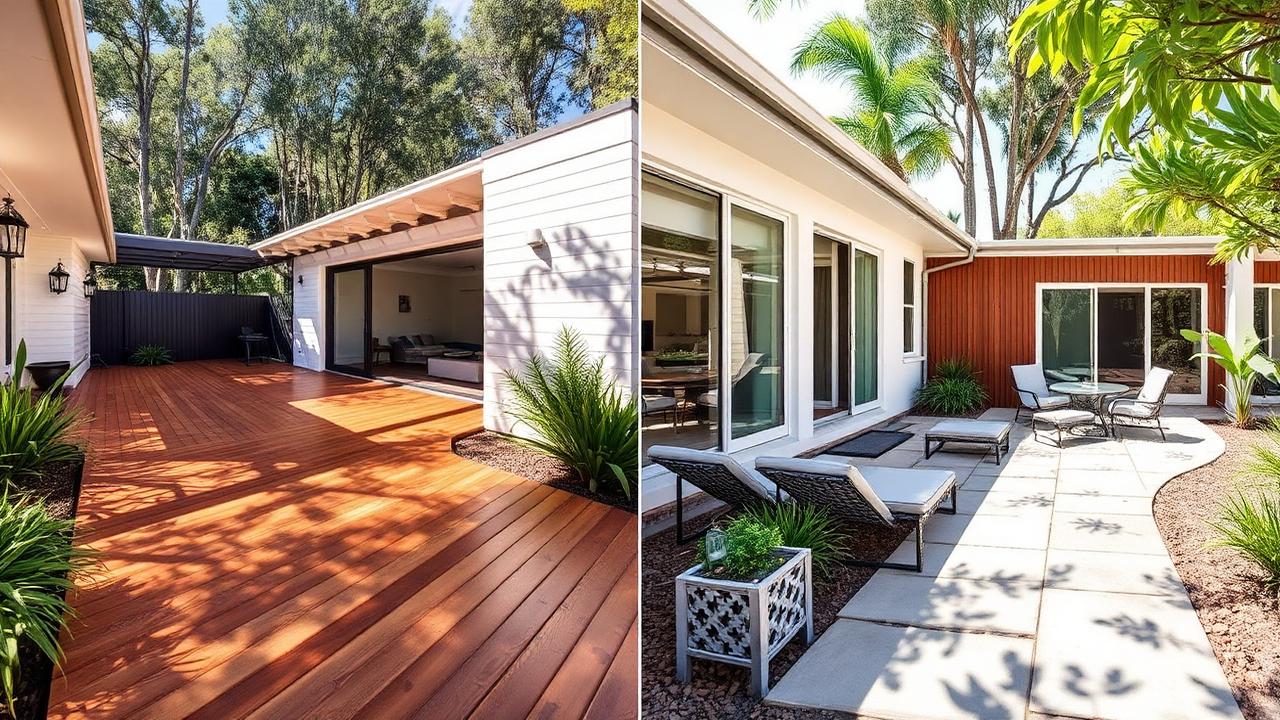
It's the most common question we get on a first site visit: should we build a deck or a patio? Both extend the home outward, both add usable living area, and both can add real resale value. But they suit very different briefs — and the wrong call can quietly cost you tens of thousands at sale time.
Cost: What You'll Actually Pay in 2026
On the Sunshine Coast in 2026, here's roughly what we see for a quality 30sqm build:
| Build type | Typical cost (30sqm) | Notes |
|---|---|---|
| Hardwood deck (spotted gum) | $14,000 – $22,000 | Includes substructure, balustrade if required |
| Composite deck (capped) | $16,000 – $24,000 | Higher material cost, lower lifetime maintenance |
| Stamped concrete patio | $9,000 – $15,000 | Most affordable; limited design flexibility |
| Paved stone patio | $13,000 – $22,000 | Premium look; depends on stone selection |
Maintenance: The Honest Truth
Patios win the maintenance battle on paper. Concrete and stone need a wash twice a year and not much else. Hardwood decks need a clean and oil every 12–18 months. Composite decks sit somewhere in the middle.
But maintenance isn't the whole story — character is. Many homeowners enjoy the small ritual of oiling a deck the way others enjoy detailing a car.
Australian Climate Suitability
Queensland is hard on outdoor builds. UV, humidity, sudden storms and salt air (within 5km of the coast) all play a part.
Coastal homes (within 5km of the beach)
Hardwood handles salt better than composite. Stick to spotted gum or blackbutt with stainless fixings.
Hinterland homes
Cooler nights and heavier dew favour composite or sealed stone — less moisture cycling, less movement.
Timber vs Composite Decking
Hardwood gives you character, repairability and resale appeal. Composite gives you uniformity and almost zero maintenance. We default to hardwood for character homes, and composite for modern minimal architecture and pool surrounds.
Pros
- Hardwood ages with patina and can be sanded back if damaged
- Composite never needs oiling and won't splinter
- Both outperform softwood by a wide margin in QLD
Cons
- Hardwood needs oiling every 12–18 months
- Composite can't be repaired locally — damaged boards must be replaced
- Cheap composite (uncapped) fades badly within two summers
Lifestyle Benefits
A deck adds a sense of being in the garden — elevated, soft underfoot, warmer in winter. A patio sits the home into the landscape — heavier, cooler in summer, better for heavy outdoor furniture and built-in kitchens.
Decks tend to win for entertaining and lounging. Patios tend to win for outdoor cooking and dining.
ROI for Resale
Quality outdoor living space is one of the most consistent value-adds in the Queensland property market. We typically see a return of $2–$3 of valuation increase for every $1 spent, provided the build is properly engineered and finished.
"In the Sunshine Coast market, a well-designed outdoor living area is no longer a luxury — buyers expect it, and they pay a premium for it."
Best Options for Queensland Homes
Our default recommendations after a decade of building across the Sunshine Coast: hardwood decks for character homes and hinterland properties; composite decks for pool surrounds and contemporary builds; stone patios for outdoor kitchens and heavy-use entertaining areas. The right call almost always shows itself on a 30-minute site visit.
FAQ
Frequently asked questions.
Do I need council approval to build a deck?
In Queensland, decks under 1m above ground generally don't need approval, but anything higher, attached to the dwelling, or with a roof typically does. We manage approvals as part of the build.
How long will a hardwood deck last on the Sunshine Coast?
A spotted gum or blackbutt deck, properly built and oiled every 12–18 months, will comfortably last 25 years.
Can you build a deck over an existing concrete patio?
Yes — it's one of the most common conversions we do. The concrete becomes the substructure base, which speeds the build and reduces cost.
Ready to start?
Let's design your project.
A free, no-obligation consultation across the Sunshine Coast & Hinterland.
Get a free quote